
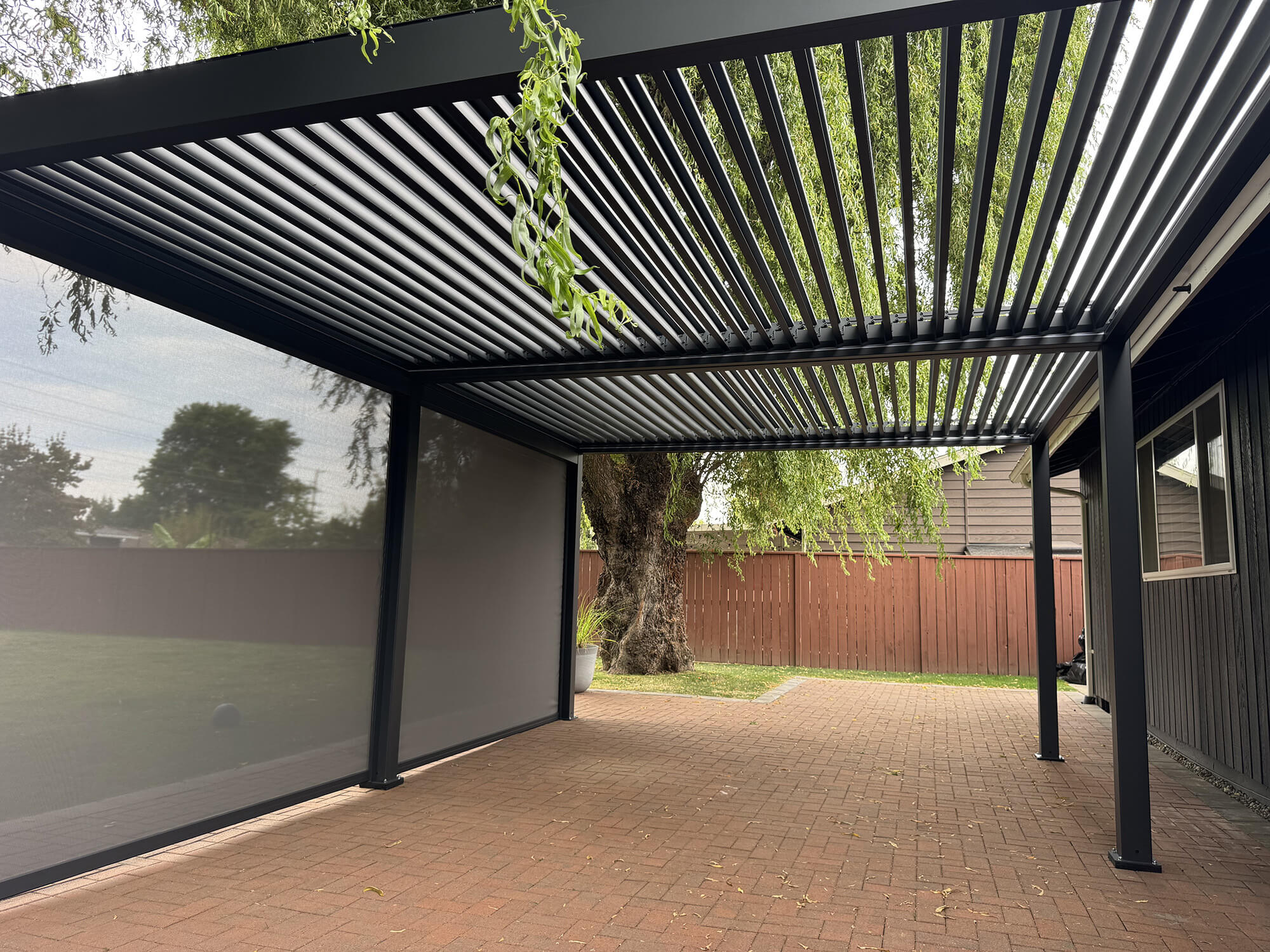
The Real Energy Savings of Motorized Solar Screens on West-Facing Seattle Decks
By Ruslan Bencheci, Owner & CEO, Star Construction WA. Washington State licensed contractor #STARCCW791L5. Updated June 2026.
West-facing is the one I get asked about most, and it’s the one where solar screens actually pull their weight. A north deck barely needs them. A west deck in July is a different animal. From about 3pm on, the sun comes in low and flat, straight at the glass, and the room behind it turns into a greenhouse. That’s the situation where a screen stops being a comfort upgrade and starts showing up on your power bill.
Let me be straight about what’s real here and what’s marketing, because there’s a lot of inflated numbers floating around in this category.
Why west-facing is the problem child
Heat gets into your house through glass in two ways: conduction (the window is hot, so it warms the air next to it) and solar heat gain (sunlight comes through the glass and heats up everything it lands on). On a west wall in summer, solar heat gain is the big one. The afternoon sun is at a low angle, so it punches almost straight through the window instead of glancing off it. Your blinds on the inside don’t help much because by the time you pull them, the heat is already through the glass and in the room.
The Department of Energy makes this point about where you stop the sun: an exterior shade is far more effective than an interior one because it blocks the heat before it ever reaches the glass. Their guidance on window treatments and energy use is worth reading if you want the building-science version. A motorized solar screen is an exterior shade. That’s the whole reason it works where your interior blinds don’t.
What the savings actually look like
Here’s where I’ll disappoint the people hoping for a single big number. Anyone who tells you a solar screen will cut your cooling bill by some exact percentage is guessing, because it depends on your house. How much west glass you have. Whether you run AC or just suffer. How shaded the wall already is. The fabric openness you pick.
What I can tell you from our own installs is the pattern. Exterior solar screens block a large share of solar heat gain before it hits the glass, and on a west-facing room that’s been baking every afternoon, the temperature difference is something you feel within a day. Clients with AC tell me it cycles less in the late afternoon, which is exactly when rates and demand are highest. Clients without AC tell me the room went from unusable after 4pm to somewhere they’ll actually sit.
The honest framing is this: in our climate, the savings show up less as a dramatic line on the bill and more as comfort plus a smaller cooling load on the handful of genuinely hot weeks we get. Seattle isn’t Phoenix. If someone sells you Phoenix numbers for a Seattle deck, be skeptical.
Fabric openness changes the math
The openness factor of the fabric, meaning how tight the weave is, controls how much sun it blocks. A tighter 3% to 5% fabric stops more heat and glare. A more open 10% to 14% fabric keeps more of your view but lets more sun through.
On a west wall where the goal is heat control, I usually steer people toward the tighter end. You’re not staring west at 4pm to enjoy a view anyway, you’re squinting into the sun. A 5% fabric kills the glare and most of the heat. If the same deck has a second side with a view worth keeping, we’ll run a more open fabric there. I wrote a separate piece comparing solar shade, blackout, and view-preserving fabric if you want to go deeper on picking the weave.
Why motorized matters for the energy part
This sounds like a convenience feature, and mostly it is, but it has a real efficiency angle. A manual screen only saves energy when someone remembers to lower it. Motorized screens, especially on a sun sensor or a timer, drop automatically when the afternoon sun hits and retract when it passes. The wall gets shaded during the exact window when it matters, every day, whether you’re home or not.
That consistency is the difference between a screen that saves energy on paper and one that saves it in practice. The retract side matters too: in winter, or on a cool Seattle morning, you want that low sun coming in to warm the room. A motorized screen rolls up and gets out of the way, so you’re not blocking free heat when you actually want it.
Where this is worth doing
If your deck or the room behind it faces west or southwest, gets hammered in the afternoon, and you either run AC or avoid the space in summer, exterior solar screens are one of the better dollar-for-comfort moves you can make on a house here. East and north exposures, less so. I’ll tell you on a site visit if I think you’d be spending money for a marginal gain, because pretending every wall needs screens is how you end up not trusting your contractor.
Screens also pair well with overhead shade. On a deck that bakes from above and from the side, a motorized louvered roof handles the overhead sun and the screens handle the low west angle, and together they make a west deck usable through the whole afternoon.
Where we work
We install motorized solar screens across Seattle, Bellevue, Mercer Island, Renton, Kenmore, Issaquah, Sammamish, Redmond, Kirkland, Woodinville, Mill Creek, and the surrounding area. Screens are one piece of the outdoor work we do. We also build custom decks, install acrylic patio covers, and add motorized retractable awnings for shade where a full screen system isn’t the right fit.
If you’ve got a west wall that turns into an oven every July and you want to know whether screens would actually help your specific setup, request a free quote. We’ll look at your exposure, your glass, and how you use the space, then give you a straight answer on what the screens will and won’t do.
Ruslan Bencheci is the owner of Star Construction WA, a licensed Washington State contractor (#STARCCW791L5) building outdoor living spaces across the greater Seattle area.