
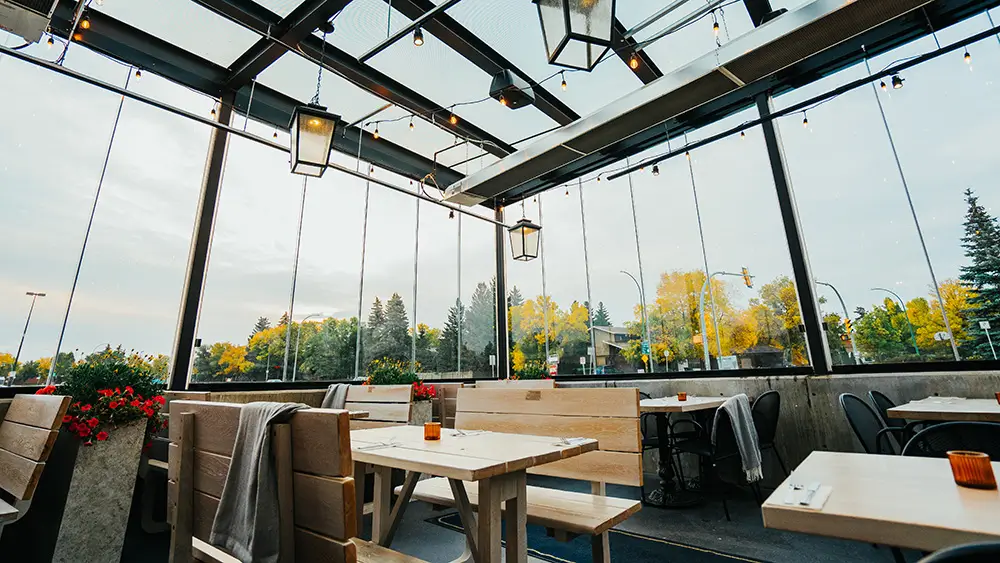
Building a Sunroom Under Heavy Tree Cover in Woodinville and Kirkland: Light, Moss and Debris
By Ruslan Bencheci, Owner and CEO, Star Construction WA. Washington State licensed contractor #STARCCW791L5, bonded and insured. Bothell, WA.
Short answer: yes, you can build a good sunroom under tall trees. You just shouldn’t build the same room you’d put on an open lot. Place it where the winter light actually lands, and give it a roof that sheds water and needles fast. The glass has to ventilate so shaded moisture can escape. Have an arborist check any big tree hanging over the site. And if you live in Kirkland, check the city’s tree rules before anyone cuts a branch.
Our office is in Bothell, a short drive from Woodinville and Kirkland, so wooded lots are a big part of what I look at. Hollywood Hill, Finn Hill, Juanita and Bridle Trails all have mature firs and maples that were there long before the houses. Homeowners there usually ask me the same thing on the first visit: will a glass room under these trees just turn green and dark? It can. Here is how I design so it doesn’t.
Why a wooded lot changes the design
Most sunroom advice assumes the problem is too much sun. On a lot of Eastside properties it’s the opposite. The trees block the low winter sun, drop needles all year, and keep everything under them damp from October through May.
None of that rules out a sunroom. It changes three decisions: where the room goes, what goes on top of it, and how it breathes.
Finding the light before picking the wall
At Woodinville and Kirkland’s latitude, the noon sun only gets about 19 degrees above the horizon on the winter solstice. At that angle, one fir 40 feet south of your house can shade the whole backyard from November to February, even if the yard is bright in July.
So on a wooded lot, I figure out where the winter light hits before we talk about anything else. Summer light doesn’t tell you much. I walk the house and look for the side with the fewest trees to the south and southwest. Sometimes that’s a different wall than the homeowner had in mind. A room off the kitchen may beat one off the family room just because there’s a gap in the tree line there.
On shaded sites I usually recommend a few more things:
- Clear glass, not tinted. Tint makes sense on a west-facing room that bakes in August. Under trees you want all the light you can get, and the Lumon panels we install are clear, single-pane tempered safety glass.
- Tall glass walls instead of a low knee wall. More vertical glass means more sky between the trunks.
- Light interior finishes. A pale floor and ceiling bounce light around the room. Dark wood soaks it up, and you feel that on a gray January afternoon.
If you haven’t decided between enclosing an existing deck and building a full addition, read my breakdown of sunroom additions versus balcony glazing and what each does for square footage first. The answer changes how much the trees matter.
Moss, mildew and trapped moisture
This is the biggest risk with any sunroom under trees. Shade keeps the roof and frames wet for days after the rain stops. If that moisture can’t get out, you get moss on the roof, mildew on the frames and condensation inside the glass. After a few winters, wood framing starts to rot. In the Pacific Northwest, trapped moisture is the main reason cheaper enclosure systems fail, and shade makes it worse.
Here is how I design against it:
- Glass that breathes. Lumon’s retractable panels leave intentional 2 to 3 mm gaps between them, and water drains out through the bottom of each panel. The room ventilates even when it’s closed. On a sunny lot that’s a nice extra. Under trees it’s the reason I’m comfortable building there.
- A steeper roof pitch. Water and needles slide off faster, so less sits long enough to grow moss.
- Guarded gutters. An open gutter under a fir fills up in weeks. A guarded one still needs cleaning, just far less often.
- Opening it up on dry days. Sliding the panels open for a few hours on a dry afternoon does more against mildew than anything else you can do.
If you already have a screened porch that stays damp and mossy under the trees, my guide on whether to convert a screened porch or build a sunroom addition covers that choice.
Needles, pollen, sap and seed fluff
Every tree drops something different. Before I pick roof materials, I want to know what’s growing above the site.
Douglas firs and cedars drop needles year round, heaviest in fall and after windstorms. The needles pile up in roof valleys, gutters and the bottom tracks of sliding glass. Firs also put out a yellow pollen in spring that coats everything for a few weeks.
Big-leaf maples are harder on a glass roof than most people expect. Aphids feed on them in summer and drip a sticky residue called honeydew. Black sooty mold then grows on it. A glass roof under a big-leaf maple usually shows a gray film by August unless you rinse it.
Black cottonwoods grow along the Sammamish River in Woodinville. They release fluffy seed in late spring that drifts into tracks and sticks to anything damp.
| Tree overhead | Main issue | What I usually recommend |
|---|---|---|
| Douglas fir, cedar | Needles in tracks and gutters, spring pollen | Solid or steep roof, guarded gutters, easy-access tracks |
| Big-leaf maple | Sticky honeydew and sooty mold in summer | Skip a glass roof directly underneath, or plan on rinsing it |
| Black cottonwood | Seed fluff in late spring | Close the panels during the seed drop, clean the tracks after |
| Mixed canopy | A bit of everything | Solid roof with skylights placed where there’s a gap in the trees |
Frameless sliding panels are easier to keep clean than people think, because the bottom track is exposed and easy to reach. A shop vac and a stiff brush once a month in fall usually does it.
Falling limbs, roots and footings
This is the part people skip, and it can cost the most.
The November 2024 windstorm brought down trees and limbs all over the Eastside. A big fir limb landing on a glass roof is a very different event from one landing on shingles. Before I design a sunroom under a large tree, I ask the homeowner to have a certified arborist look at it first. You pay the arborist directly. They’ll tell you whether the tree is healthy, which limbs over the site should come off, and how far the root zone reaches.
Roots matter because a sunroom addition needs footings. Digging through the main roots of a big tree can weaken it enough to become a hazard a few years later. I’d rather shift the footprint a few feet, or use footings that bridge the roots, than hurt a healthy tree. That tree is also shading the house every summer.
Kirkland’s tree rules, and why you check before cutting
Kirkland regulates tree removal on private property, and the rules shape sunroom plans more than people expect.
The City of Kirkland’s Tree Code FAQ sets how many trees you can remove in 12 months based on lot size:
- Lots up to 10,000 square feet: 2 trees
- Lots up to 20,000 square feet: 3 trees
- Larger lots: 4 trees
To qualify, you also have to keep a minimum number of trees on the property. Trees 26 inches or more in diameter, measured 4.5 feet up, are Landmark Trees. Removing one takes a permit and three replacement trees.
Two details catch people off guard:
- Kirkland counts heavy pruning (more than 25% of the canopy) or topping as removal.
- Trees in critical areas like wetlands, streams or steep slopes need written permission from the city before you prune at all.
If you plan to thin trees to get more light into a new sunroom, settle the tree plan with the city first.
Woodinville has its own tree regulations, and they aren’t the same as Kirkland’s. I check local rules on every job before I quote, and I’ll flag anything on your lot that looks like it needs a permit.
Keeping a sunroom under trees in good shape
Under heavy canopy, plan on a bit more upkeep than a sunroom on an open lot. This is the routine I suggest to homeowners on wooded lots:
- Fall (October through December): Clear the gutters and roof valleys, vacuum the bottom tracks once a month, and check again after any windstorm.
- Winter: Open the panels on dry days to air the room out. Wipe condensation off the inside of the glass before it sits.
- Spring: Rinse off fir pollen once the heavy drop is over. If you’re near the river, close the panels while the cottonwoods are seeding.
- Summer: Rinse honeydew off any glass under a big-leaf maple, and give the glass and frames a general wash.
Written out it looks like a lot. In practice it’s an hour or two a month in fall and a few minutes a month the rest of the year.
Frequently asked questions
Can I put a glass roof on a sunroom under trees?
You can, but under dense canopy it’s rarely the best choice. Under firs it collects needles, and under big-leaf maples it collects sticky honeydew. A solid roof with skylights placed where there’s a gap in the trees usually gives you more usable light with less cleaning.
Do I need a permit to remove a tree for a sunroom in Kirkland?
It depends on your lot size, how many trees you have and how big the tree is. Removals inside the city’s yearly allowance are simpler. Landmark Trees, 26 inches or more in diameter, always need a permit. Check with the City of Kirkland before cutting anything.
Will a sunroom under trees be too cold in winter?
Our Lumon rooms are three-season rooms, so none of them feel like indoor space in January without a heat source. Shade makes that more noticeable. For most homeowners, a small infrared heater or electric fireplace covers the coldest weeks.
How often will I clean the tracks under fir trees?
About once a month in fall and after windstorms, and every couple of months the rest of the year.
How much does a sunroom cost on a wooded lot?
Most residential balcony and deck glazing jobs in our area land between $12,000 and $28,000. Sunroom additions usually start around $45,000. A wooded lot can add costs outside our quote, such as an arborist report, tree work or a different footing design. I list anything tree-related on the written quote so it doesn’t show up as a surprise later.
Do you build sunrooms in Woodinville and Kirkland?
Yes. We’re based in Bothell and build throughout King and Snohomish counties, including Woodinville, Kirkland, Redmond, Bothell and Mill Creek. Homeowners nearby may also want to see our page on sunrooms and balcony glazing in Redmond.
Where to go from here
Every wooded lot is different, and the right design depends on which trees are where. The consultation is free and takes about 45 minutes. I look at your winter light, the trees overhead and the ground where the footings would go. You get a written, itemized quote within five business days.
You can see finished work in our gallery or read more about our custom sunrooms and Lumon balcony glazing. On a very shaded lot where you’d rather have an open-air cover than a full enclosure, a louvered pergola in Kirkland is worth a look. You can angle the louvers to let rain and debris fall through.
Star Construction WA
2220 164th Pl SE, Bothell, WA 98012
(206) 600-2225 · [email protected]
Monday to Saturday, 7am to 7pm
We serve Seattle, Bellevue, Mercer Island, Kirkland, Woodinville, Redmond, Bothell, Renton, Issaquah, Sammamish, Lynnwood, Everett and Mill Creek. Request a free quote or call us directly.
Washington State licensed contractor #STARCCW791L5, bonded and insured. Authorized Lumon dealer for the Seattle metro.